

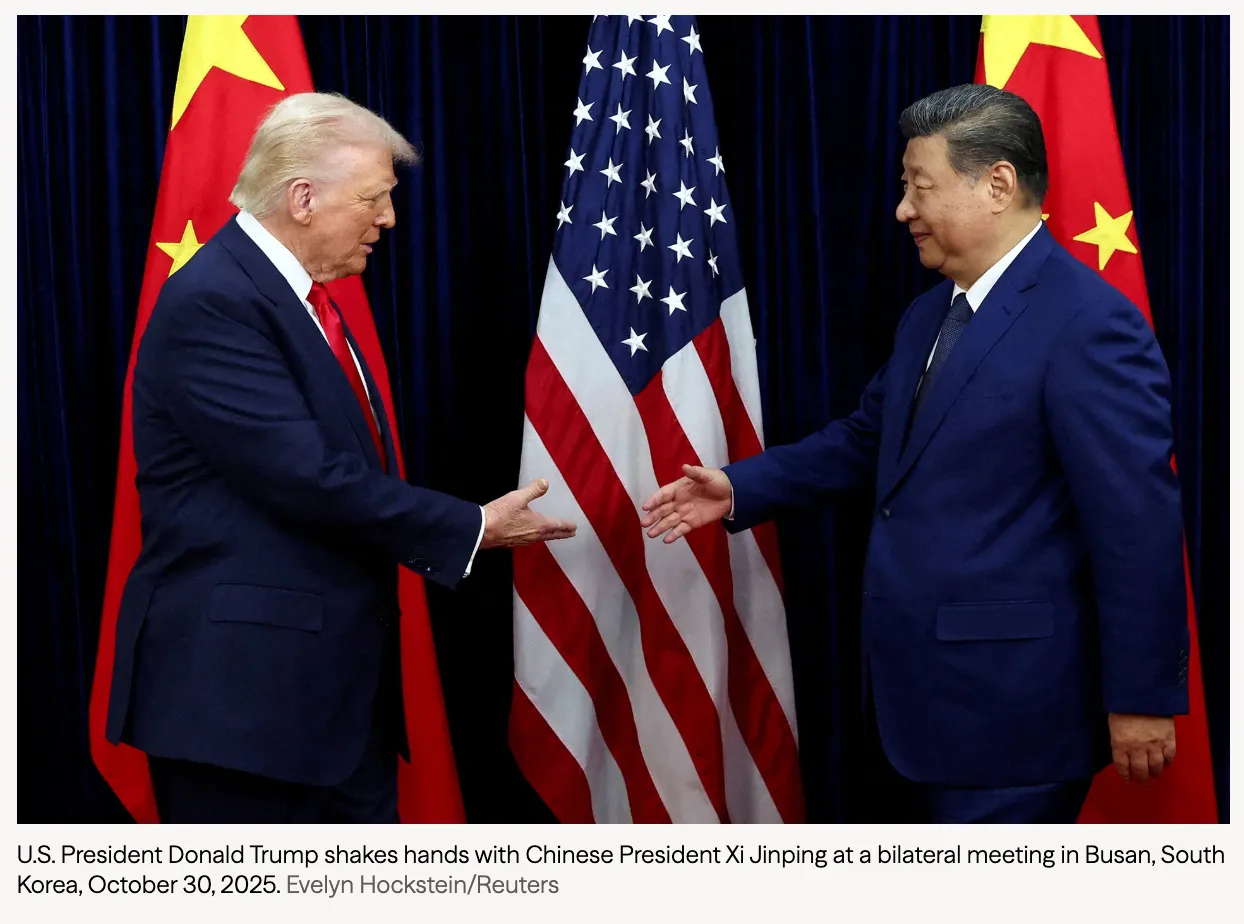



As of today, Donald Trump is on Chinese soil — the first American president to set foot in Beijing in nearly nine years, and fittingly, the last one to visit was Trump himself, back in November 2017. That symmetry is not accidental. It tells you everything about how little has changed, and how much has.
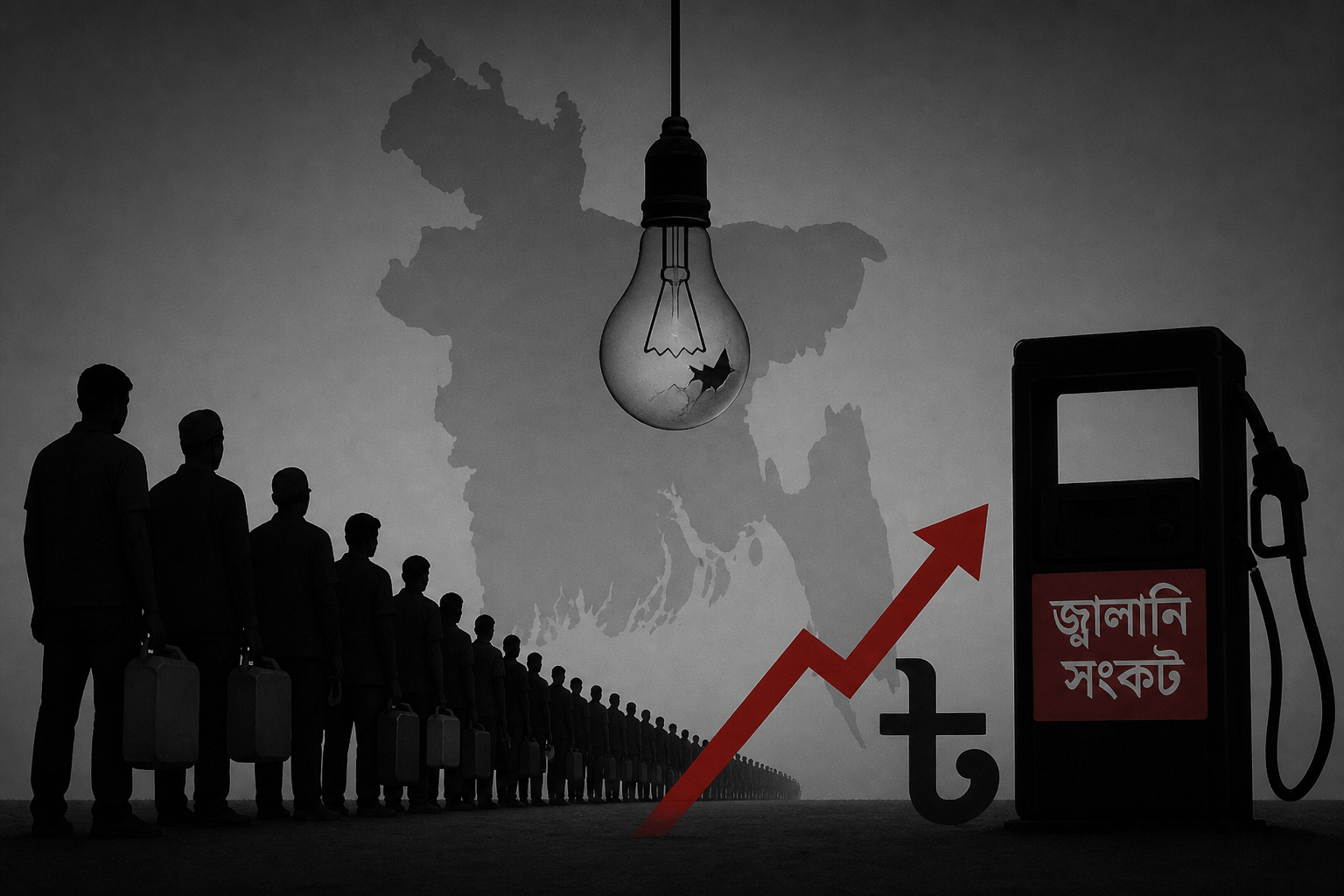
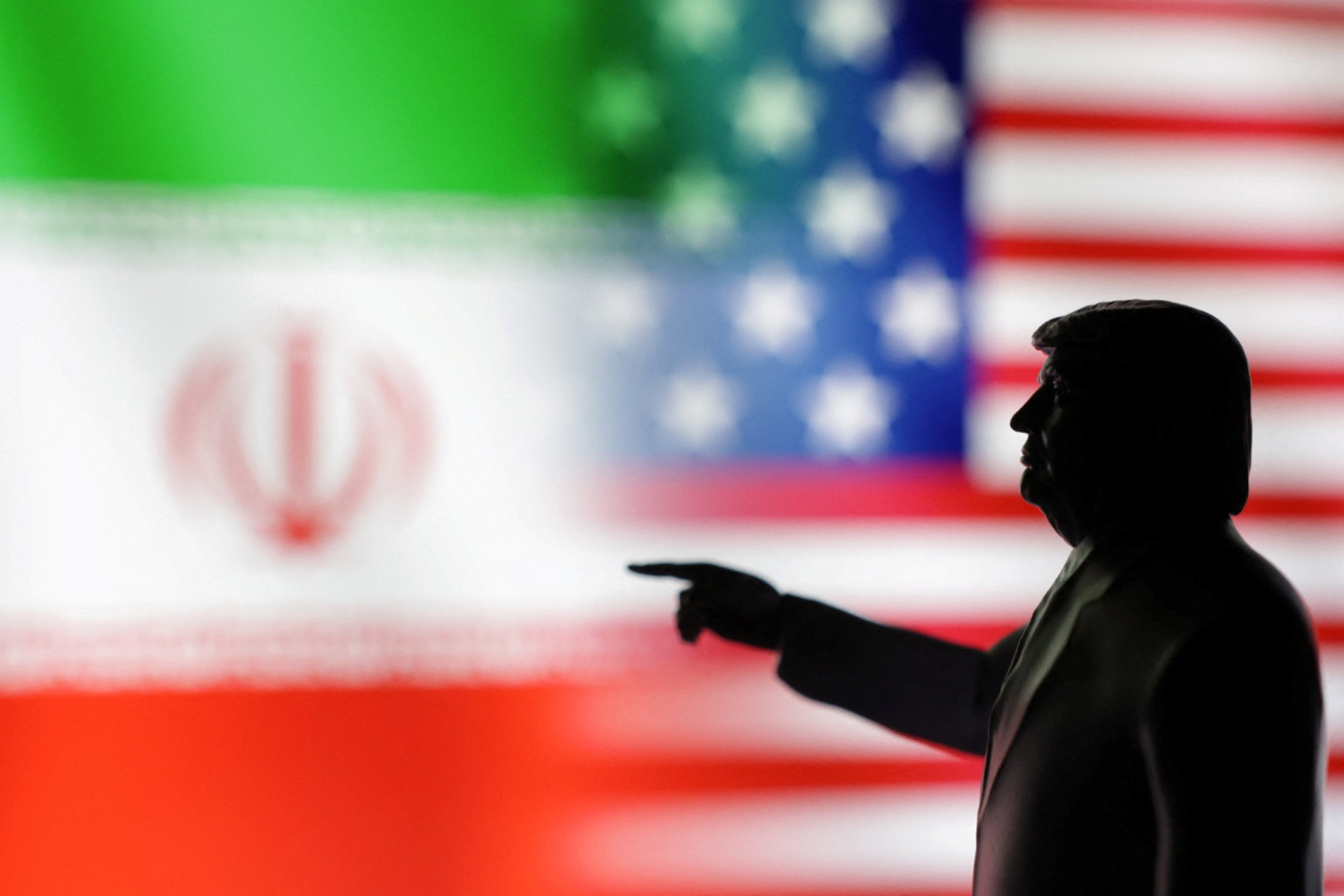
The world Trump is returning to is barely recognizable from the one he left. The United States is bogged down in a war with Iran that was supposed to last four to six weeks and has now stretched into months. The Strait of Hormuz — through which roughly a fifth of the world's oil flows — is functionally paralyzed. Gas prices are spiking. Trump's approval ratings are at record lows. And the man he is flying to meet, Xi Jinping, knows all of this.
This is not a summit between equals arriving at the table in good faith. This is a summit where one side needs something urgently, and the other can afford to wait.
Why Trump Needs This More Than Xi Does
Let us be honest about the power dynamics at play here.
When Trump first visited Beijing in 2017, he arrived as a newly elected president riding a wave of domestic popularity, accompanied by a relatively modest entourage of business executives. This time, he is bringing the CEOs of Nvidia, Apple, Boeing, Exxon, Citigroup, Visa, Qualcomm, Blackstone, and Elon Musk of Tesla. This is not a diplomatic delegation. This is a rescue mission dressed up in business attire.
The Iran war has exposed a fundamental weakness in American strategic overextension. By diverting military assets to the Middle East, Washington has thinned its presence in the Indo-Pacific — a fact Beijing has quietly noted, and quietly filed away. China is Iran's largest trading partner and its top oil buyer. It did not need to fire a single shot to gain leverage over this summit. The war handed it to them for free.
Xi, meanwhile, arrives at this summit described by analysts as "remarkably more confident" than at any previous meeting with Trump. China's economy, while not without its problems, is no longer scrambling to prove itself. Beijing has spent years building alternative trade networks, strengthening the Belt and Road Initiative, and deepening ties with Russia, the Global South, and the Middle East. The economic dependency that once made China vulnerable to American pressure has been slowly, deliberately diluted.
The Price of the Ticket: Taiwan
Before the plane even landed, Trump made headlines by announcing he would raise the issue of arms sales to Taiwan with Xi — then seemingly opened the door to renegotiating them. "President Xi would like us not to," he said, "and I'll have that discussion."
That sentence should alarm Taipei far more than any Chinese military exercise.
For decades, Washington's support for Taiwan has rested on deliberate ambiguity. The United States neither endorses Taiwanese independence nor concedes the island to Beijing. This ambiguity has kept the peace precisely because it keeps both sides uncertain. If Trump, in pursuit of a trade deal, even slightly shifts the language — from "does not support independence" to "opposes independence" — that diplomatic tightrope snaps.
Some experts have called such an outcome "the most destabilizing result" possible from this summit. I would go further: it would be the most consequential concession an American president has made since Nixon's opening to China in 1972. And unlike Nixon's gambit, which was a strategic masterstroke, this one would be motivated not by grand strategy but by the need to close a deal before Air Force One takes off.
Beijing knows this. That is why Taiwan remains, in their words, "the biggest point of risk" in the bilateral relationship — and also their most valuable bargaining chip.
<img src ='https://cms.thepapyrus.com.bd/public/storage/inside-article-image/1s5j5022z.webp'>
The Economics: What Is Actually Being Sold
Strip away the geopolitics and this summit is, at its core, a commercial negotiation.
Boeing expects China to purchase up to 500 of its 737 aircraft — its largest potential sale since 2017, and a lifeline for a company whose reputation has been battered by years of safety scandals. The symbolism is deliberate: China is offering Boeing a hand out of the mud, and Boeing is grateful enough to fly its CEO halfway around the world to say so.
The financial institutions on the delegation — Citigroup, Visa, Blackstone — are chasing something far larger: access to Chinese household savings, which average a staggering 40 percent of income, the highest rate in the world. For a United States carrying $40 trillion in national debt and desperately in need of buyers for its treasury bonds, the savings of Chinese consumers represent perhaps the single most attractive untapped financial pool on earth.
China will never surrender monetary sovereignty by allowing full RMB-dollar convertibility. But there is a workaround being quietly discussed: American technology and financial companies selling stablecoin products to Chinese consumers — digital assets backed by U.S. treasuries — allowing Chinese wealth to flow into American financial markets without the Chinese government formally opening its capital account. It is financial integration by the back door. And if it works, it benefits both sides enormously.
Exxon's presence is the most straightforward piece of the puzzle. China consumes nearly twice as much electricity as the United States, and its energy supply chain has been thrown into chaos by the Iran war and the Hormuz blockade. Russia supplies roughly twenty percent of China's energy needs. The rest must come from somewhere. American liquefied natural gas is an uncomfortable but logical answer.
What China Wants: To Be Left Alone to Win
Here is the part that most Western analysts consistently get wrong about China's strategic goals.
China does not want to replace America. It does not want to be the world's policeman, its reserve currency issuer, or the guarantor of global trade routes. These roles are expensive, thankless, and politically destabilizing. What China wants — what it has always wanted — is to be left alone to develop, to accumulate, and to grow stronger while the rest of the world burns through its resources and goodwill on battlefields from Tehran to Kyiv.
Strategic patience is not a slogan in Beijing. It is a governing philosophy.
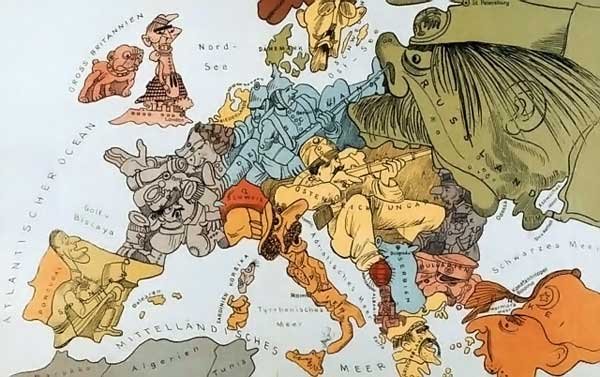
While the United States exhausts its treasury and its credibility in the Middle East, while Europe fragments under the weight of its own contradictions, while Russia bleeds in Ukraine and now props up Iran, China is building infrastructure, training engineers, and buying time. The Belt and Road Initiative is not a military alliance — it is a multi-decade economic encirclement strategy that requires no bullets to succeed.
Trump's visit, whatever its outcomes, will be read in Beijing through this lens. Every deal signed is a concession extracted from a weakened partner. Every softening on Taiwan is a long-term strategic gain wrapped in short-term economic language. China is playing a game measured in decades. Trump is playing one measured in news cycles.
The Nixon Parallel — And Its Limits
It has become fashionable to compare this moment to Nixon's 1972 opening to China — an audacious diplomatic reversal that reshaped the Cold War balance. The parallel is not without merit. Then as now, an American president perceived as hawkish on China was seeking strategic maneuvering room against a third adversary — then the Soviet Union, now Russia-backed Iran.
But Nixon went to Beijing from a position of strategic initiative. He chose the moment; the moment did not choose him. Trump has been dragged to Beijing by circumstances — a war that went wrong, an economy under strain, and a domestic political need for a win.
That difference matters. Nixon got China. Trump may get a Boeing contract and a photo at the Temple of Heaven.
A Final Word of Caution
I want to be clear: much of what I have written above is informed speculation. Summits are unpredictable. Trump is more unpredictable still.
It is possible this meeting produces genuine progress — a durable trade framework, meaningful cooperation on Hormuz, even a quiet understanding on Taiwan that preserves rather than undermines stability. Trump has surprised before.
But it is also possible that three months from now, we look back on this visit the way we look back on 2017: as the last moment of warmth before a new spiral of tariffs, expulsions, and recriminations.
What I am confident of is this: Xi Jinping will leave this summit having given up less than Trump. That is not an insult to American diplomacy. It is simply a reflection of where the two men are standing — one at the peak of his domestic authority, the other with gas prices at home and a war that will not end.
Beijing can afford to be patient. The question is whether Washington can afford to wait.

Comments